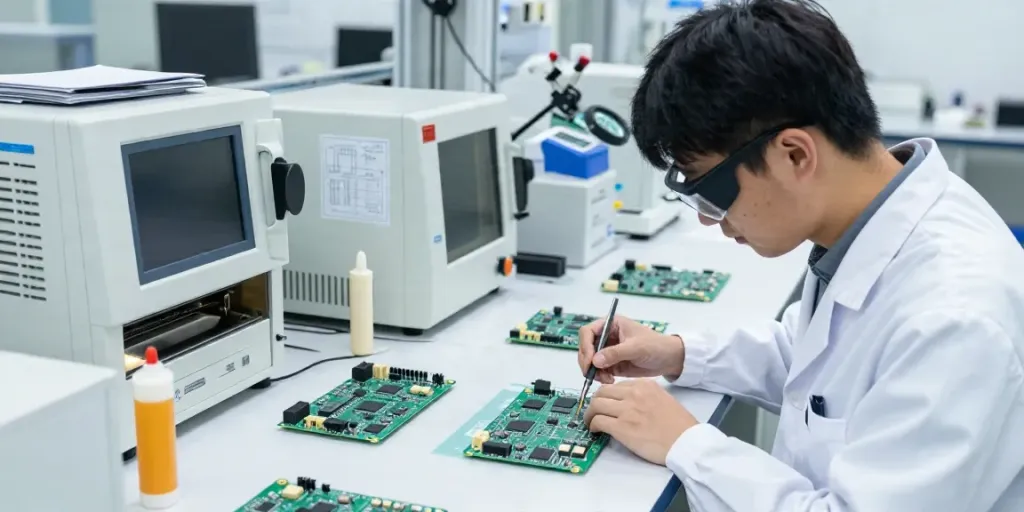
Understanding BGA PCB Assembly Basics
Ball Grid Array (BGA) PCB assembly is a critical technology in modern electronics manufacturing, enabling the effective placement of high-density components on circuit boards. Leveraging the unique structure of BGAs, which employ an array of solder balls for connections, manufacturers can achieve better performance in smaller footprints. This method is particularly advantageous for devices that demand high-speed signals and robust electrical performance. When exploring options, BGA PCB assembly offers significant insights into its capabilities and advantages.
What is BGA PCB Assembly?
BGA PCB assembly refers to the process of mounting Ball Grid Arrays onto printed circuit boards using various soldering techniques. BGAs consist of an array of solder balls positioned beneath the component, which are melted during soldering to create electrical connections between the component and the PCB. This design provides superior electrical performance and is ideal for high-density applications found in smartphones, computers, and other sophisticated electronic devices.
Key Components and Tools Used
The BGA assembly process relies on several key components and tools, including:
- Solder Paste: A mixture of solder and flux applied to the PCB before component placement.
- Placement Machine: Equipment that accurately positions the BGA onto the PCB.
- Reflow Oven: Used to heat the solder paste, causing it to melt and bond the BGA to the PCB.
- Inspection Systems: Automated systems or manual methods to verify the quality and placement of components.
Differences Between BGA and Other Assembly Types
Compared to traditional leaded components or other surface-mount technology (SMT) techniques, BGA assembly offers distinct advantages. The primary differences include:
- Connection Method: BGAs utilize solder balls instead of pins, allowing for a more compact design.
- Thermal and Electrical Performance: BGAs reduce inductance and capacitance, enhancing signal speed and performance.
- Manufacturing Efficiency: The automated processes for BGA assembly streamline production and minimize errors.
The BGA Assembly Process Explained
Steps in the BGA Assembly Procedure
The BGA assembly procedure typically involves several critical steps to ensure high-quality connections:
- Preparation: This includes cleaning the PCB and applying solder paste in the designated areas.
- Placement: The BGA is accurately placed onto the solder paste using a pick-and-place machine.
- Reflow Soldering: The assembly passes through a reflow oven, where the solder balls melt and create electrical connections.
- Inspection: Visual and automated inspections check for correct placement and solder joint integrity.
Common Techniques: Reflow vs. Wave Soldering
In BGA assembly, reflow soldering is the dominant technique, where solder paste is heated to its melting point, allowing for a strong connection. Wave soldering, while effective for through-hole components, is less compatible with BGAs due to their design and requires specific conditions to avoid issues like cold solder joints.
Quality Control Measures in BGA Assembly
To ensure high reliability and performance, manufacturers employ several quality control measures, such as:
- Automated Optical Inspection (AOI): Quickly assesses the quality of solder joints and component placement.
- X-ray Inspection: Essential for detecting internal issues within BGAs that are not visible externally.
- Functional Testing: Validates that the assembled PCB operates as intended.
Advantages of BGA PCB Assembly
High-Density Design Capabilities
BGA technology allows designers to pack more functionalities into a smaller area compared to traditional components. This is crucial for modern electronic devices, which strive for compactness without sacrificing performance.
Enhanced Electrical Performance and Reliability
With lower inductance and superior thermal dissipation, BGA assemblies contribute to enhanced electrical performance. This results in better signal integrity and reliability, making BGAs ideal for high-speed applications.
Cost-Effectiveness in Mass Production
Although the initial setup for BGA assembly may be higher due to specialized equipment, the efficiency gained through automated processes and reduced material waste leads to significant cost savings in mass production environments.
Challenges in BGA Assembly
Common Issues and Troubleshooting Tips
While BGA assembly brings numerous benefits, challenges such as solder bridging, voids in solder joints, and warpage can arise. To address these issues, manufacturers should implement robust inspection techniques and thorough process controls.
Managing Thermal Expansion and Stress
Thermal expansion mismatches between the BGA and PCB can lead to mechanical stress, affecting the reliability of solder joints. Proper design and careful selection of materials are critical to mitigate these effects.
Regulatory Compliance and Standards
Compliance with industry standards such as IPC-A-610 is essential for BGA assembly. Manufacturers must ensure all processes meet these rigorous standards to maintain quality and reliability.
Future Trends in BGA PCB Assembly
Emerging Technologies and Innovations
The future of BGA PCB assembly is closely tied to advancements in manufacturing technology. Innovations such as 3D printing and advanced solder materials are expected to enhance assembly efficiency and performance.
Impact of AI and Automation on PCB Assembly
Artificial intelligence and automation are set to revolutionize BGA assembly by optimizing processes, reducing errors, and increasing production speeds. Smart factories will increasingly rely on these technologies to enhance their assembly lines.
Predicted Market Growth and Demand in 2026
According to market analysis, the demand for BGA PCB assembly is projected to grow significantly by 2026, driven by advancements in IoT, consumer electronics, and automotive applications. Manufacturers must prepare to meet this increasing demand through innovative processes and technologies.
What is a BGA on a PCB?
A Ball Grid Array (BGA) on a PCB is a type of surface-mount packaging used in integrated circuits, characterized by solder balls arranged in a grid pattern on the bottom of the package.
Is BGA soldered?
Yes, BGA components are soldered to the PCB using heat, typically through reflow soldering techniques, which melt the solder balls during the assembly process.
What is the PCB assembly process?
The PCB assembly process involves several steps, including solder paste application, component placement, soldering (usually through reflow), and inspection to ensure the quality of the final product.
What is the difference between FPGA and BGA?
FPGA (Field Programmable Gate Array) is a type of programmable logic device that can be configured after manufacturing, while BGA refers to a packaging method used for integrated circuits, enabling high-density connections on PCBs.